发布时间:2026-01-30 来源:
When paint starts to break boundaries, the story changes.
Recently, a series of online videos under hashtags such as #QuartzSandTexturePainting, #DIYDecorativePainting, and #AcrylicCreativePainting have been trending high.
Take texture painting for example: it involves mixing acrylic paint with quartz sand and smearing the mixture with a brush or palette knife to create bold, textured color blocks. Even ordinary people can finish a "decent-looking decorative painting" with a little time and effort.
 Left: Year of the Horse Decorative Painting_Acrylic Marker © Xifeng Xiaoniang
Right: Refrigerator Magnet_Acrylic Marker © Yizhi Haidan

Little Monsters_Acrylic x Quartz Sand Texture Painting © Miaomiaozi
This is more than just an artistic creation—it’s like an open class on material experimentation. People are suddenly realizing that paint is not just for drawing, but can be "played with" to unlock endless possibilities.
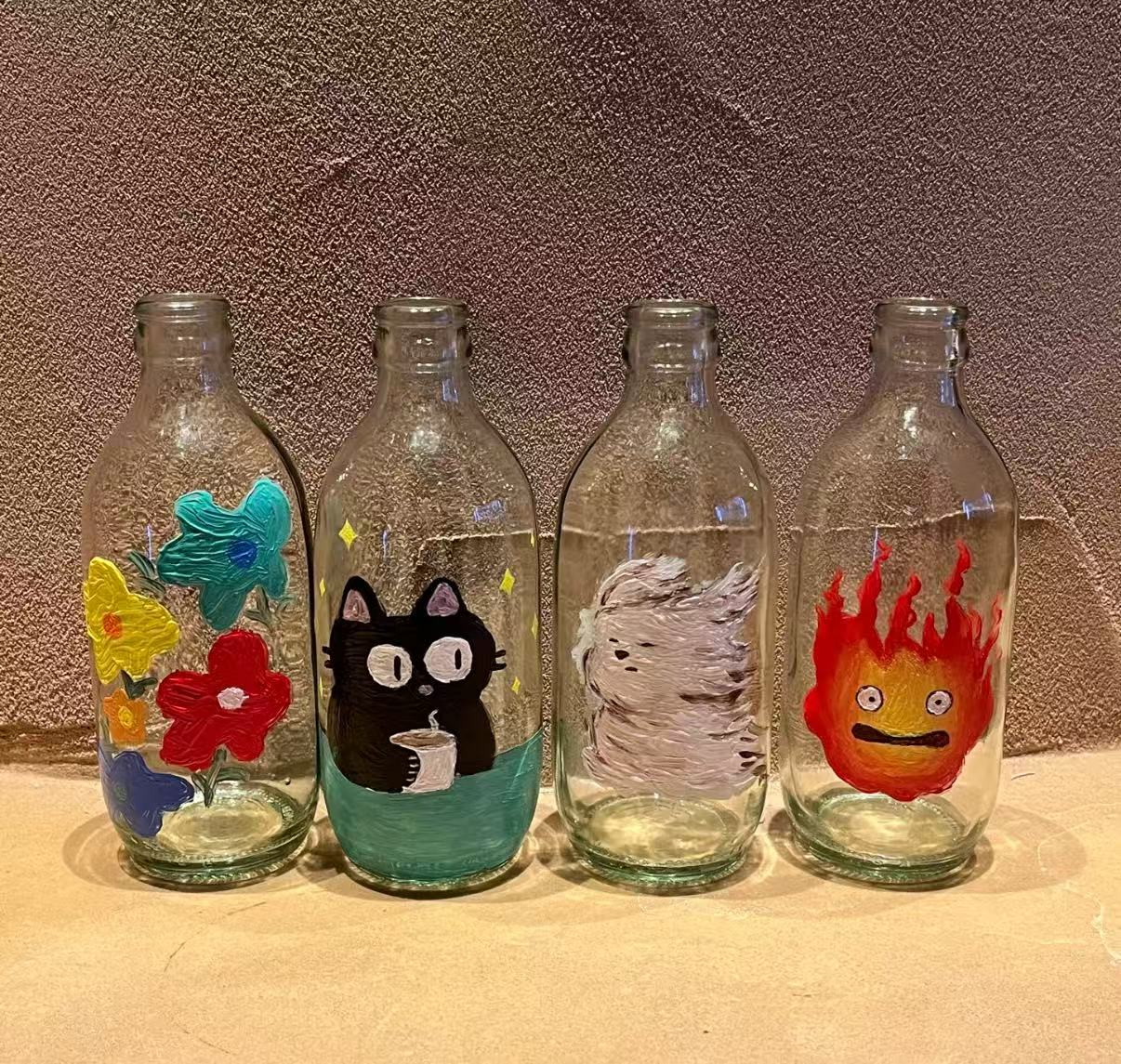
Acrylic Bottle Painting © Shi Xiaohua Ya
01 Why Has Acrylic Painting Become a Market Favorite?
Latest industry data shows that the scale of China's art supplies market exceeded 80 billion yuan in 2025, with the acrylic art supplies category registering a year-on-year growth of 47.3%—a growth rate far outpacing traditional oil and watercolor paints. Behind this data lies an art consumption market that is being redefined.
The rise of acrylic painting is no accident. It combines the rich texture of oil paint with the quick-drying property of watercolor, shortening the creation cycle of a work by 70% compared to traditional oil painting. For contemporary creators who pursue efficiency and expression, this is not just a technological upgrade, but a liberation of creative freedom.
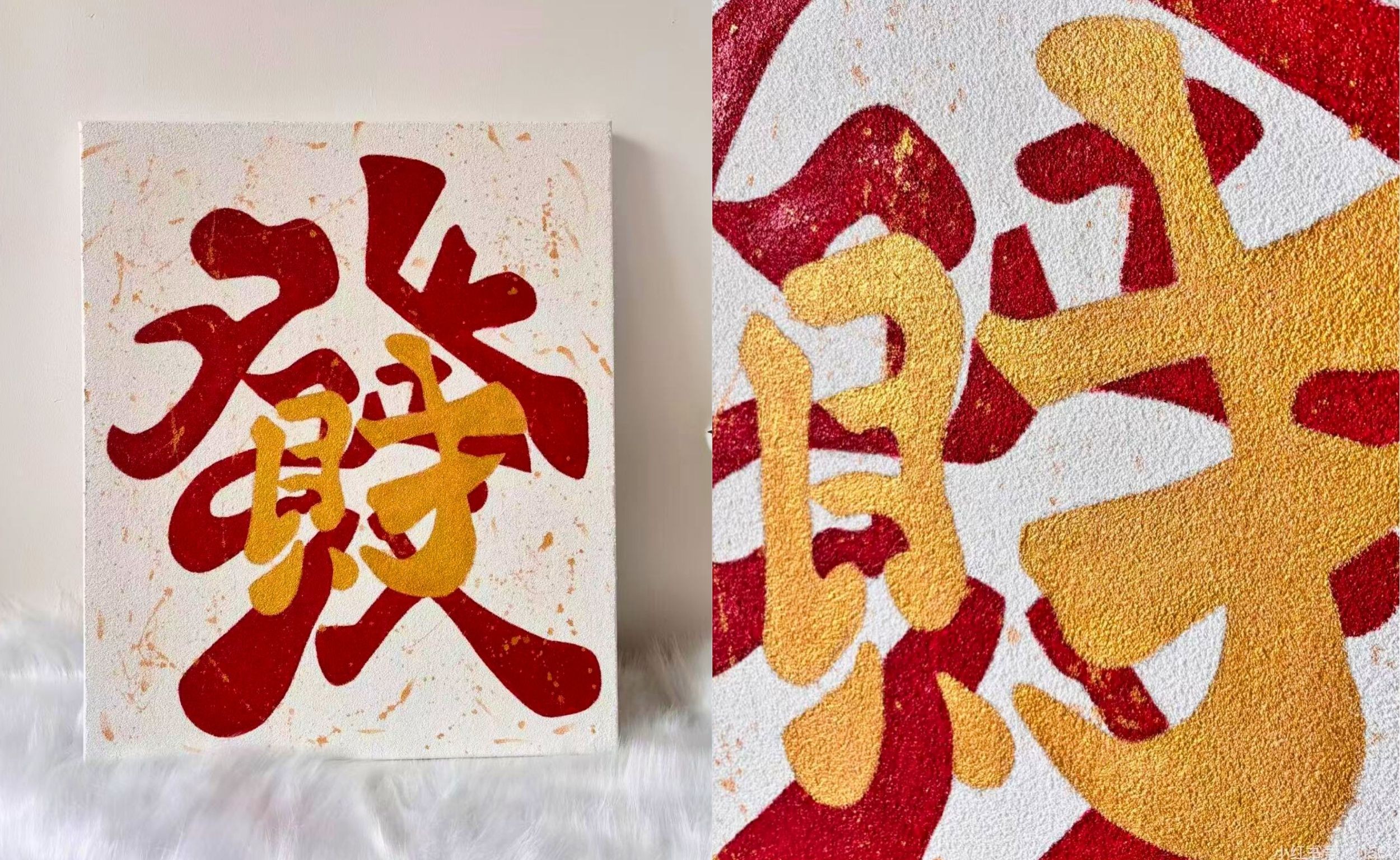
Wishing for Prosperity in the New Year_Acrylic x Quartz Sand Texture Painting © Huahua Shiren Happy
More notably, the integration of acrylic paint with diverse media is forging an unprecedented artistic language: sculptural textures from "acrylic + quartz sand", layered light and shadow from "acrylic + metal foil", blurred virtual-real boundaries from "acrylic + digital transfer printing"...
These innovations are not only seen on canvases, but also permeate diverse fields such as cultural and creative products, spatial design, and fashion cross-border collaborations.
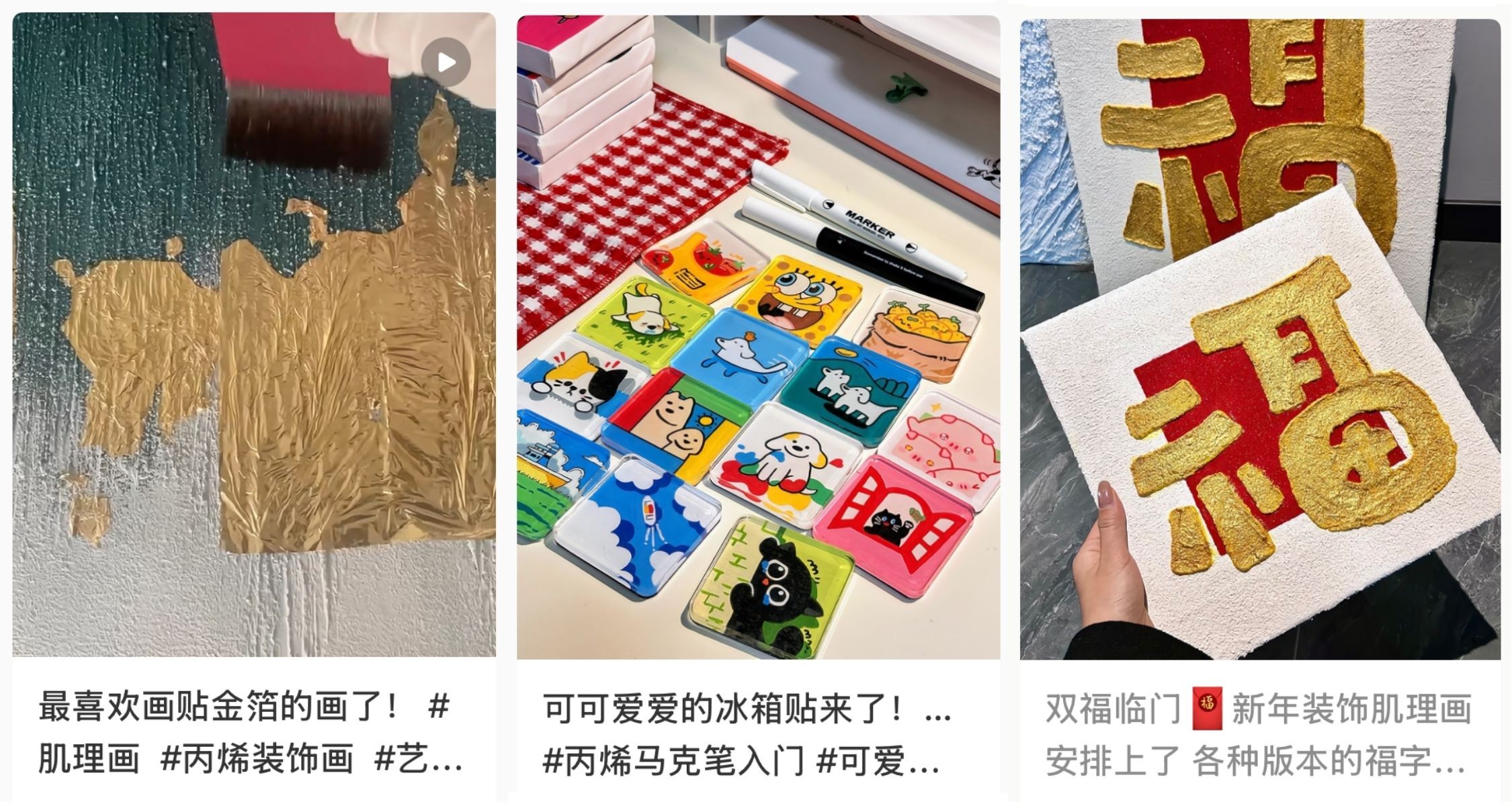
Acrylic Creative Painting © Xiaohongshu
02 How is Acrylic Painting Unlocking a 10-Billion-Yuan Cultural and Creative Market?
Market research indicates that cultural and creative products incorporating acrylic painting elements or techniques can command a premium of 3 to 5 times that of ordinary products. In the consumer market dominated by Generation Z, products with a "handmade feel", "unique materiality", and "artistic narrative" are becoming the new benchmarks for value measurement.
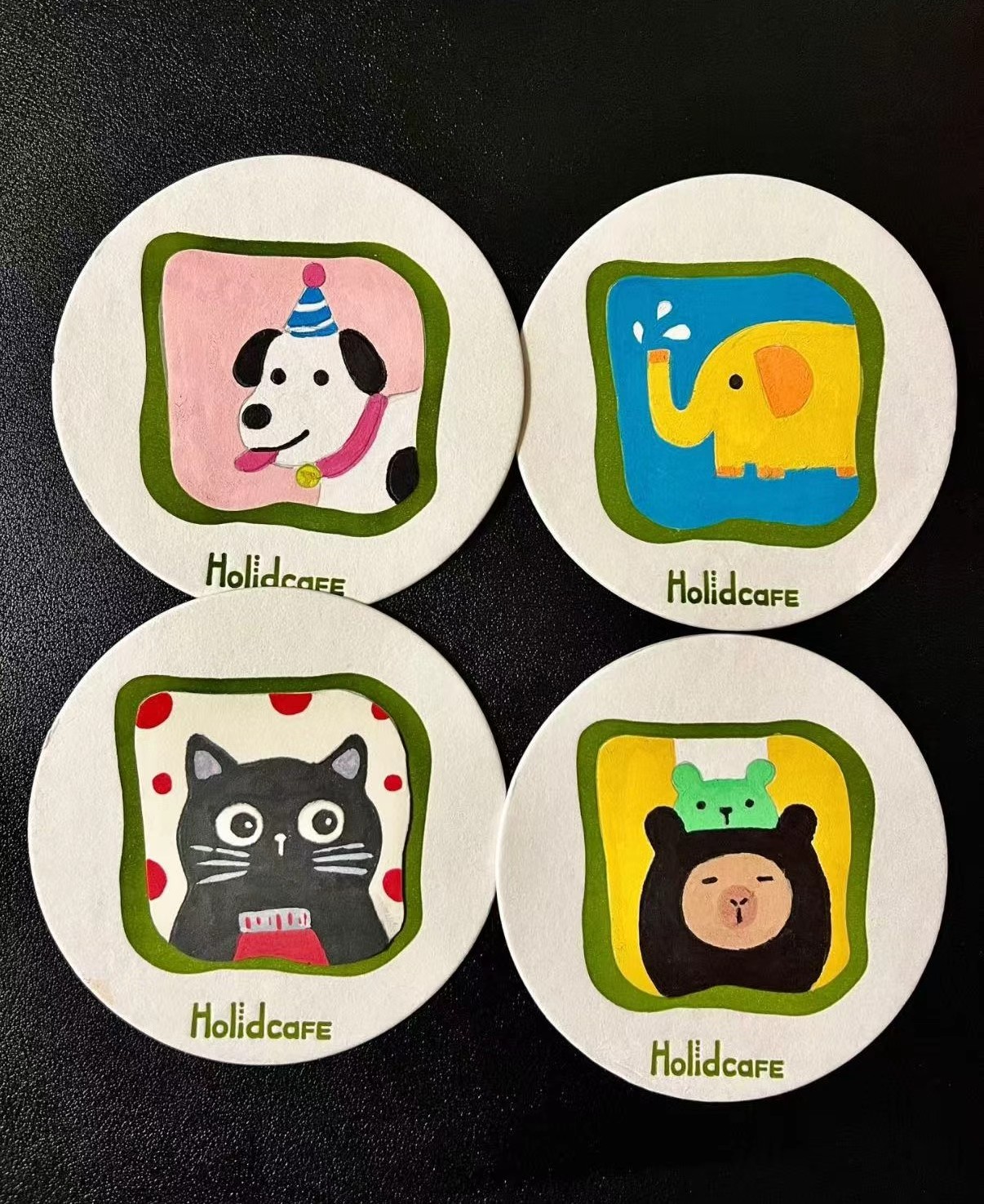
Creative Coasters_Acrylic Marker © Buran Zenmeban
Three major trends are emerging:
· Democratization of Collection:
Acrylic works are easy to preserve and affordable, driving art collection from a "niche investment" to a "mass emotional consumption".
· Digitalization of Creation:
Over 60% of acrylic creators stream their creative process via short videos, building a closed-loop ecosystem of "creation - display - sales".
· Cross-border Application:
Acrylic aesthetics are breaking industry boundaries, from trendy toy painting and home decoration to fashion item printing and digital collectible design.
03 How Will Art Materials Define the Next Era of Cultural and Creativity?
On the threshold of 2026, the boom of acrylic painting is only the beginning. With the development of new technologies such as smart materials, eco-friendly pigments, and programmable media, the boundary between artistic creation and industrial application will continue to blur.
Three major transformations are on the horizon:
· Intelligent Materials:
Thermochromic acrylics, photochromic pigments and more will endow artworks with "dynamic life".
· Sustainable Production:
The plant-based acrylic pigment market is projected to grow at an annual rate of 35%, with environmental protection becoming a core competitive edge.
· Immersive Experience:
AR technology will extend physical paintings with digital narratives, multiplying their collection value.
04 Building an Innovative Value Chain from Paint to Industry
The 120th China Stationery Fair (CSF) will set up dedicated exhibition areas for art supplies & aesthetic tools, creative design & cultural and creative products, among others. This will serve as a concentrated showcase for emerging art supplies such as acrylic paints and their derivative application achievements, while in-depth forums will explore more possibilities for acrylic and other art materials on-site.
CSF aims to build a vertically integrated platform spanning from materials to market and from creation to industry, so as to continuously promote industry consensus.
Only by proactively embracing and making the most of every innovation in art materials can the cultural and creative industry keep breaking the boundaries of inspiration, and gain a new round of growth momentum while elevating the aesthetic value and experiential depth of products.
Data Source:
China Culture, Education and Sports Goods Association, 2025 Art Consumption Market White Paper





扫描关注微信公众号

抖音扫描二维码

© 2019 CSF文化用品商品交易会
京ICP备2021039643号-1
 沪公网安备 31010902002629号